

Key Characteristics
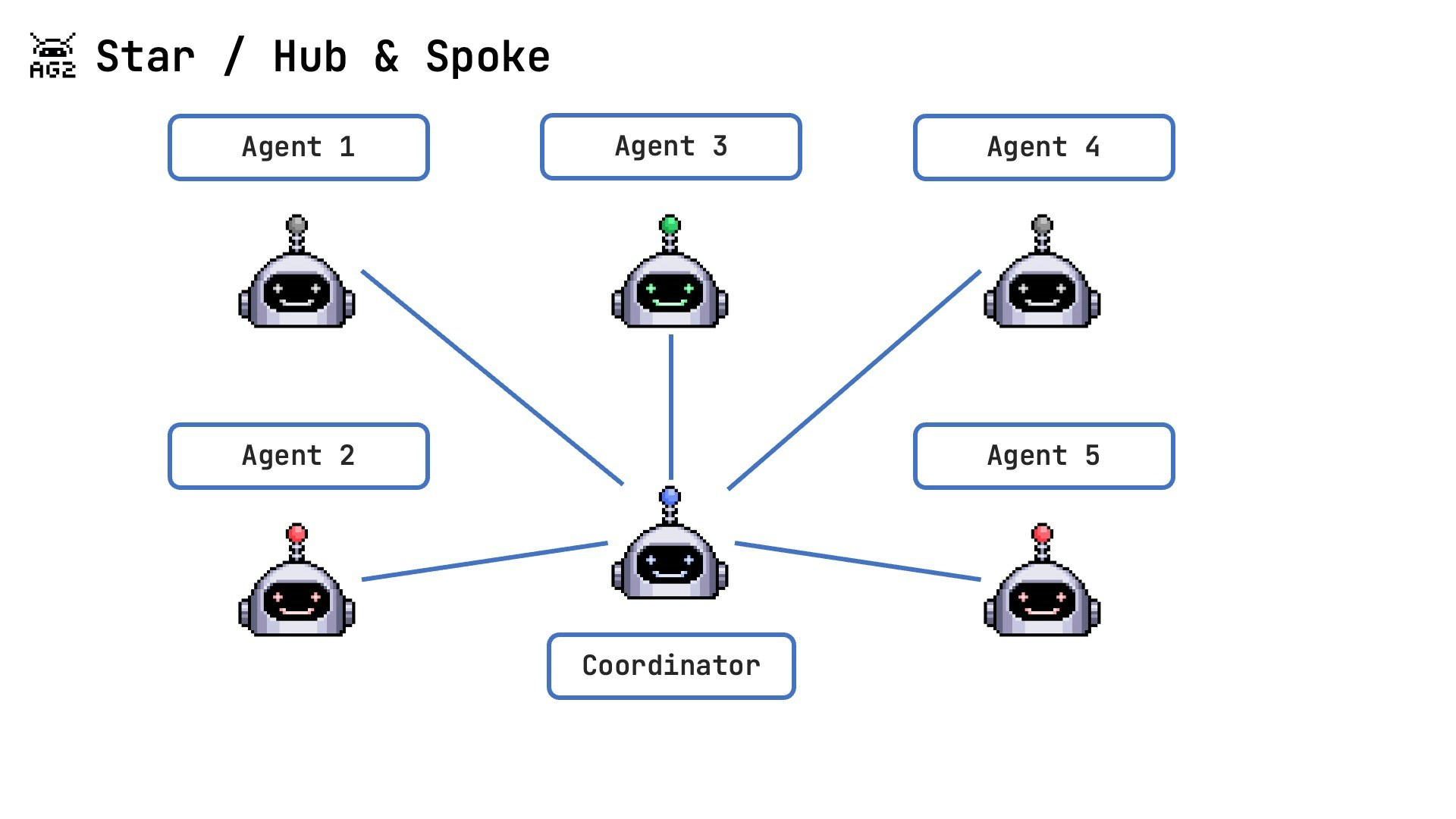
- Coordinator Agent (Hub): A central agent that maintains overall context, delegates specific tasks to specialists, and synthesizes their outputs into a coherent final result. The coordinator understands the big picture and how each specialist’s work contributes to the whole.
- Specialist Agents (Spokes): Domain-specific agents that perform focused tasks within their area of expertise. Each specialist receives targeted instructions from the coordinator, performs its specialized work, and reports results back to the coordinator without needing to communicate with other specialists.
Information Flow
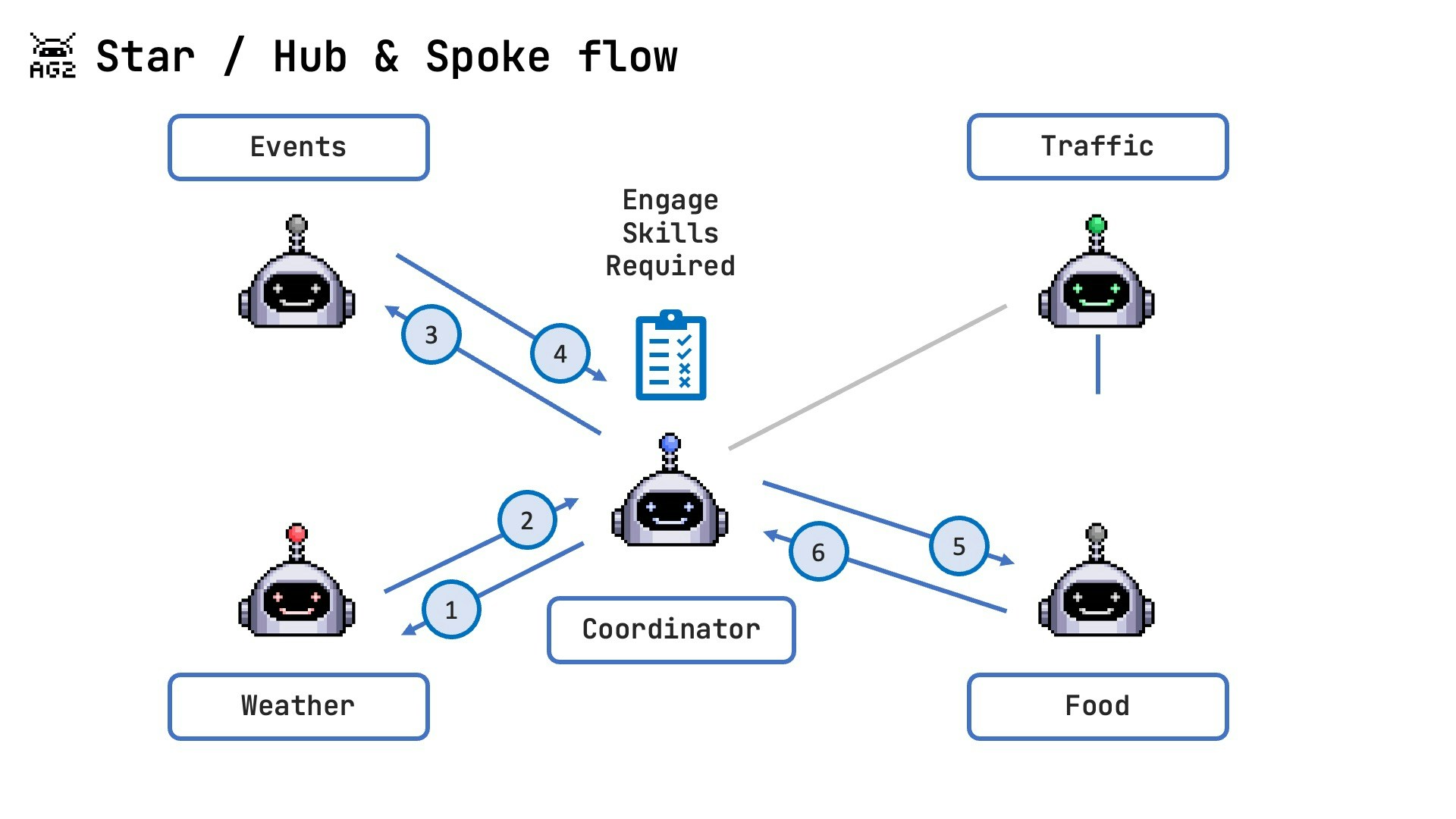
- Outward Flow: The coordinator distributes specific tasks to appropriate specialists based on their expertise.
- Inward Flow: Specialists complete their tasks and report results directly back to the coordinator.
- Synthesis: The coordinator integrates all specialist inputs into a cohesive final output.
Implementation
In our implementation using AG2’s Swarm, we’ve created:- A clear star topology with one coordinator agent and multiple specialist agents, each focused on a specific domain of expertise.
-
Direct handoffs designed for efficient task delegation:
- The coordinator uses
OnConditionto route tasks to the appropriate specialist based on the query type - Each specialist is configured with
AfterWorkto always report back directly to the coordinator - The coordinator maintains context and synthesizes the final response
- The coordinator uses
-
Shared context variables to track:
- Which specialist(s) are needed for a given query
- The status of each specialist’s work
- The accumulated specialist responses
-
A complete workflow that follows the star model:
- The coordinator analyzes the initial request
- The coordinator delegates specific tasks to appropriate specialists
- Specialists perform their focused work and report back
- The coordinator synthesizes the final response
Agent Flow
Code
In this code example we use OpenAI’s GPT-4o mini with structured outputs.
import json
from typing import Annotated
from autogen import (
    ConversableAgent,
    ContextExpression,
    UserProxyAgent,
    LLMConfig,
)
from autogen.agentchat import initiate_group_chat
from autogen.agentchat.group.patterns import DefaultPattern
from autogen.agentchat.group import ReplyResult, ContextVariables, AgentTarget, OnContextCondition, OnCondition, RevertToUserTarget, ContextExpression, ExpressionContextCondition, StringAvailableCondition, StringLLMCondition, ExpressionAvailableCondition

# Example task: Create a virtual city guide that can answer questions about weather, events,
# transportation, and dining in various cities

# Setup LLM configuration
llm_config = LLMConfig(api_type="openai", model="gpt-4.1-mini", parallel_tool_calls=False, cache_seed=None)

# Shared context for all agents in the group chat
shared_context = ContextVariables({
    # Query state
    "query_analyzed": False,
    "query_completed": False,

    # Specialist task tracking
    "weather_info_needed": False,
    "weather_info_completed": False,
    "events_info_needed": False,
    "events_info_completed": False,
    "traffic_info_needed": False,
    "traffic_info_completed": False,
    "food_info_needed": False,
    "food_info_completed": False,

    # Content storage
    "city": "",
    "date_range": "",
    "weather_info": "",
    "events_info": "",
    "traffic_info": "",
    "food_info": "",
    "final_response": ""
})

# User agent for interaction
user = UserProxyAgent(
    name="user",
    code_execution_config=False
)

# ========================
# SPECIALIST FUNCTIONS
# ========================

def provide_weather_info(weather_content: str, context_variables: ContextVariables) -> ReplyResult:
    """Submit weather information for the specified city and date range"""
    context_variables["weather_info"] = weather_content
    context_variables["weather_info_completed"] = True

    return ReplyResult(
        message="Weather information provided and stored.",
        context_variables=context_variables,
        target=AgentTarget(coordinator_agent)  # Always return to the coordinator
    )

def provide_events_info(events_content: str, context_variables: ContextVariables) -> ReplyResult:
    """Submit events information for the specified city and date range"""
    context_variables["events_info"] = events_content
    context_variables["events_info_completed"] = True

    return ReplyResult(
        message="Events information provided and stored.",
        context_variables=context_variables,
        target=AgentTarget(coordinator_agent)  # Always return to the coordinator
    )

def provide_traffic_info(traffic_content: str, context_variables: ContextVariables) -> ReplyResult:
    """Submit traffic/transportation information for the specified city"""
    context_variables["traffic_info"] = traffic_content
    context_variables["traffic_info_completed"] = True

    return ReplyResult(
        message="Traffic/transportation information provided and stored.",
        context_variables=context_variables,
        target=AgentTarget(coordinator_agent)  # Always return to the coordinator
    )

def provide_food_info(food_content: str, context_variables: ContextVariables) -> ReplyResult:
    """Submit dining recommendations for the specified city"""
    context_variables["food_info"] = food_content
    context_variables["food_info_completed"] = True

    return ReplyResult(
        message="Dining recommendations provided and stored.",
        context_variables=context_variables,
        target=AgentTarget(coordinator_agent)  # Always return to the coordinator
    )

# ========================
# SPECIALIST AGENTS
# ========================

with llm_config:
    weather_specialist = ConversableAgent(
        name="weather_specialist",
        system_message="""You are a specialist in weather forecasting and climate information.
        Your task is to provide accurate and helpful weather information for the specified city and date range.
        Include:
        1. Temperature ranges (high/low)
        2. Precipitation forecasts
        3. Notable weather conditions (sunny, rainy, windy, etc.)
        4. Recommendations for appropriate clothing or preparation

        Be concise but informative, focusing on what would be most relevant for someone planning activities.
        Use your tool to provide the weather information.
        """,
        functions=[provide_weather_info],
    )

    events_specialist = ConversableAgent(
        name="events_specialist",
        system_message="""You are a specialist in local events, attractions, and entertainment.
        Your task is to provide information about interesting events, attractions, and activities for the specified city and date range.
        Include:
        1. Major events (concerts, festivals, sports games)
        2. Popular attractions and landmarks
        3. Cultural activities (museums, galleries, theater)
        4. Outdoor recreation opportunities

        Be specific about what's happening during the requested time frame and focus on notable highlights.
        Use your tool to provide the events information.
        """,
        functions=[provide_events_info],
    )

    traffic_specialist = ConversableAgent(
        name="traffic_specialist",
        system_message="""You are a specialist in transportation, traffic patterns, and getting around cities.
        Your task is to provide helpful transportation information for the specified city.
        Include:
        1. Best ways to get around (public transit, rental options, walking)
        2. Traffic patterns and areas to avoid
        3. Parking recommendations if relevant
        4. Tips for efficient transportation between popular areas

        Focus on practical advice that will help someone navigate the city efficiently.
        Use your tool to provide the traffic information.
        """,
        functions=[provide_traffic_info],
    )

    food_specialist = ConversableAgent(
        name="food_specialist",
        system_message="""You are a specialist in local cuisine, dining, and food culture.
        Your task is to provide dining recommendations for the specified city.
        Include:
        1. Notable restaurants across different price ranges
        2. Local specialties and must-try dishes
        3. Food districts or areas with good dining options
        4. Any famous food markets or unique food experiences

        Focus on what makes the food scene in this city special and provide diverse options.
        Use your tool to provide the food recommendations.
        """,
        functions=[provide_food_info],
    )

# ========================
# COORDINATOR FUNCTIONS
# ========================

def compile_final_response(response_content: str, context_variables: ContextVariables) -> ReplyResult:
    """Compile the final comprehensive response from all specialist inputs"""
    context_variables["final_response"] = response_content
    context_variables["query_completed"] = True

    return ReplyResult(
        message="Final response compiled successfully.",
        context_variables=context_variables,
        target=AgentTarget(user)  # Return to user with final response
    )

# ========================
# COORDINATOR AGENT
# ========================

with llm_config:
    coordinator_agent = ConversableAgent(
        name="coordinator_agent",
        system_message="""You are the coordinator for a virtual city guide service that helps users plan their visits or activities.

        You have four specialist agents that you can delegate to:
        1. Weather Specialist - Provides weather forecasts and climate information
        2. Events Specialist - Provides information about local events, attractions, and activities
        3. Traffic Specialist - Provides transportation advice and traffic information
        4. Food Specialist - Provides dining recommendations and food culture information

        Your responsibilities include:
        1. Analyzing user queries to determine which specialists need to be consulted
        2. Delegating specific questions to the appropriate specialists
        3. Synthesizing information from all specialists into a comprehensive, coherent response
        4. Ensuring the response is helpful, well-organized, and addresses the user's query

        First, analyze the user's query to understand what city they're asking about and what timeframe.
        Then, delegate to the appropriate specialists to gather the necessary information.
        Finally, synthesize all the information into a helpful response.

        When responding to the user, organize the information clearly with appropriate sections and highlights.
        """,
        functions=[compile_final_response],
    )

@coordinator_agent.register_for_llm(description="Currency exchange calculator.")
def analyze_query(
        city: Annotated[str, "Location/City"],
        date_range: Annotated[str, "Date range for the activities"],
        needs_weather_info: Annotated[bool, "Provide weather information?"],
        needs_events_info: Annotated[bool, "Provide events information?"],
        needs_traffic_info: Annotated[bool, "Provide traffic information?"],
        needs_food_info: Annotated[bool, "Provide food/eating information?"],
        context_variables: ContextVariables
    ) -> ReplyResult:
    """Analyze the user query and determine which specialists are needed"""
    context_variables["city"] = city
    context_variables["date_range"] = date_range
    context_variables["query_analyzed"] = True

    # Determine which specialist information is needed based on the parameters
    context_variables["weather_info_needed"] = needs_weather_info
    context_variables["events_info_needed"] = needs_events_info
    context_variables["traffic_info_needed"] = needs_traffic_info
    context_variables["food_info_needed"] = needs_food_info

    return ReplyResult(
        message=f"Query analyzed. Will gather information about {city} for {date_range}.",
        context_variables=context_variables
    )

# ========================
# HANDOFFS REGISTRATION
# ========================

# Coordinator Agent handoffs to specialists
coordinator_agent.handoffs.add_many(
    [
        # Conditional handoffs to specialists based on what information is needed
        OnContextCondition( # Example of Context Variable-based transfer, this happens automatically without LLM
            target=AgentTarget(weather_specialist),
            condition=ExpressionContextCondition(ContextExpression("${weather_info_needed} == True and ${weather_info_completed} == False")),
            available=StringAvailableCondition("query_analyzed")
        ),
        OnCondition( # Uses an LLM to determine if this transfer should happen
            target=AgentTarget(events_specialist),
            condition=StringLLMCondition("Delegate to the events specialist for local events and activities information."),
            available=ExpressionAvailableCondition(ContextExpression("${query_analyzed} == True and ${events_info_needed} == True and ${events_info_completed} == False")),
        ),
        OnCondition(
            target=AgentTarget(traffic_specialist),
            condition=StringLLMCondition("Delegate to the traffic specialist for transportation and traffic information."),
            available=ExpressionAvailableCondition(ContextExpression("${query_analyzed} == True and ${traffic_info_needed} == True and ${traffic_info_completed} == False")),
        ),
        OnCondition(
            target=AgentTarget(food_specialist),
            condition=StringLLMCondition("Delegate to the food specialist for dining recommendations."),
            available=ExpressionAvailableCondition(ContextExpression("${query_analyzed} == True and ${food_info_needed} == True and ${food_info_completed} == False")),
        ),
    ]
)
# Revert to user when finished
coordinator_agent.handoffs.set_after_work(RevertToUserTarget())

# Each specialist always returns to the coordinator
weather_specialist.handoffs.set_after_work(AgentTarget(coordinator_agent))
events_specialist.handoffs.set_after_work(AgentTarget(coordinator_agent))
traffic_specialist.handoffs.set_after_work(AgentTarget(coordinator_agent))
food_specialist.handoffs.set_after_work(AgentTarget(coordinator_agent))

# ========================
# INITIATE THE GROUP CHAT
# ========================

def run_star_pattern():
    """Run the star pattern to provide city information"""
    print("Initiating Star Pattern for City Guide...")

    agent_pattern = DefaultPattern(
        initial_agent=coordinator_agent,
        agents=[
            # Coordinator (hub)
            coordinator_agent,
            # Specialists (spokes)
            weather_specialist, events_specialist, traffic_specialist, food_specialist
        ],
        context_variables=shared_context,
        user_agent=user,
    )

    chat_result, final_context, last_agent = initiate_group_chat(
        pattern=agent_pattern,
        messages="What should I do in Seattle this weekend? I'm visiting from Friday 7th March 2025 to Sunday 9th March 2025. I want to know the weather, events, transportation options, and good places to eat.",
        max_rounds=100,
    )

    # The final response will be stored in final_context["final_response"]
    if final_context["query_completed"]:
        print("City guide response completed successfully!")
        print("\n===== FINAL RESPONSE =====\n")
        print(final_context["final_response"])
        print("\n\n===== FINAL CONTEXT VARIABLES =====\n")
        print(json.dumps(final_context.to_dict(), indent=2))
        print("\n\n===== SPEAKER ORDER =====\n")
        for message in chat_result.chat_history:
            if "name" in message and message["name"] != "_Group_Tool_Executor":
                print(f"{message['name']}")
    else:
        print("City guide response did not complete successfully.")

if __name__ == "__main__":
    run_star_pattern()
Output
Initiating Star Pattern for City Guide...
user (to chat_manager):

What should I do in Seattle this weekend? I'm visiting from Friday 7th March 2025 to Sunday 9th March 2025. I want to know the weather, events, transportation options, and good places to eat.

--------------------------------------------------------------------------------

Next speaker: coordinator_agent

>>>>>>>> USING AUTO REPLY...
coordinator_agent (to chat_manager):

***** Suggested tool call (call_lOKIQoHHPVXdBOm83IZPZdQe): analyze_query *****
Arguments:
{"city":"Seattle","date_range":"Friday 7th March 2025 to Sunday 9th March 2025","needs_weather_info":true,"needs_events_info":true,"needs_traffic_info":true,"needs_food_info":true}
******************************************************************************

--------------------------------------------------------------------------------

Next speaker: _Group_Tool_Executor

>>>>>>>> EXECUTING FUNCTION analyze_query...
Call ID: call_lOKIQoHHPVXdBOm83IZPZdQe
Input arguments: {'city': 'Seattle', 'date_range': 'Friday 7th March 2025 to Sunday 9th March 2025', 'needs_weather_info': True, 'needs_events_info': True, 'needs_traffic_info': True, 'needs_food_info': True}
_Group_Tool_Executor (to chat_manager):

***** Response from calling tool (call_lOKIQoHHPVXdBOm83IZPZdQe) *****
Query analyzed. Will gather information about Seattle for Friday 7th March 2025 to Sunday 9th March 2025.
**********************************************************************

--------------------------------------------------------------------------------

Next speaker: coordinator_agent

coordinator_agent (to chat_manager):

[Handing off to weather_specialist]

--------------------------------------------------------------------------------

Next speaker: weather_specialist

>>>>>>>> USING AUTO REPLY...
weather_specialist (to chat_manager):

***** Suggested tool call (call_PbFRJTCt7U8Jf2urY0xq1zpn): provide_weather_info *****
Arguments:
{"weather_content":"Please provide the detailed weather forecast for Seattle from Friday, 7th March 2025 to Sunday, 9th March 2025, including temperature ranges (high/low), precipitation forecasts, notable weather conditions (sunny, rainy, windy, etc.), and recommendations for appropriate clothing or preparation."}
*************************************************************************************

--------------------------------------------------------------------------------

Next speaker: _Group_Tool_Executor

>>>>>>>> EXECUTING FUNCTION provide_weather_info...
Call ID: call_PbFRJTCt7U8Jf2urY0xq1zpn
Input arguments: {'weather_content': 'Please provide the detailed weather forecast for Seattle from Friday, 7th March 2025 to Sunday, 9th March 2025, including temperature ranges (high/low), precipitation forecasts, notable weather conditions (sunny, rainy, windy, etc.), and recommendations for appropriate clothing or preparation.'}
_Group_Tool_Executor (to chat_manager):

***** Response from calling tool (call_PbFRJTCt7U8Jf2urY0xq1zpn) *****
Weather information provided and stored.
**********************************************************************

--------------------------------------------------------------------------------

Next speaker: coordinator_agent

>>>>>>>> USING AUTO REPLY...
coordinator_agent (to chat_manager):

***** Suggested tool call (call_Vmf7N9brWRgVYDXPcRbxltfp): transfer_to_events_specialist_1 *****
Arguments:
{}
************************************************************************************************

--------------------------------------------------------------------------------

Next speaker: _Group_Tool_Executor

>>>>>>>> EXECUTING FUNCTION transfer_to_events_specialist_1...
Call ID: call_Vmf7N9brWRgVYDXPcRbxltfp
Input arguments: {}
_Group_Tool_Executor (to chat_manager):

***** Response from calling tool (call_Vmf7N9brWRgVYDXPcRbxltfp) *****
Transfer to events_specialist
**********************************************************************

--------------------------------------------------------------------------------

Next speaker: events_specialist

>>>>>>>> USING AUTO REPLY...
events_specialist (to chat_manager):

***** Suggested tool call (call_LTgc3sZVoQLIbqWagoVtMtpO): provide_events_info *****
Arguments:
{"events_content":"For Seattle from Friday, 7th March 2025 to Sunday, 9th March 2025, here are some highlights:\n\n1. Major Events:\n- Seattle International Film Festival: Special weekend screenings featuring international films.\n- Concert at The Showbox: Live performance by a popular indie band on Friday night.\n- Seattle Sounders FC soccer game: Home match at Lumen Field on Saturday afternoon.\n\n2. Popular Attractions:\n- Space Needle: Iconic landmark with panoramic city views.\n- Pike Place Market: Famous historic market with fresh seafood, crafts, and street performances.\n- Museum of Pop Culture (MoPOP): Exhibits on music, sci-fi, and pop culture artifacts.\n\n3. Cultural Activities:\n- Seattle Art Museum: Featuring contemporary and traditional art exhibits.\n- Paramount Theatre: Broadway show performances during the weekend.\n\n4. Outdoor Recreation:\n- Discovery Park: Large urban park with hiking trails and beach access.\n- Green Lake Park: Popular spot for walking, jogging, and paddle boating.\n\nTransportation Options:\n- King County Metro buses: Comprehensive coverage of the city.\n- Link Light Rail: Connects downtown to the airport and neighborhoods.\n- Ride-shares and bike rentals widely available.\n\nDining Recommendations:\n- The Pink Door: Italian cuisine with a cozy ambiance near Pike Place Market.\n- Canlis: Fine dining with panoramic views, perfect for a special dinner.\n- Dick's Drive-In: Classic Seattle fast-food for a quick, tasty meal.\n\nLet me know if you need more specific recommendations or details."}
************************************************************************************

--------------------------------------------------------------------------------

Next speaker: _Group_Tool_Executor

>>>>>>>> EXECUTING FUNCTION provide_events_info...
Call ID: call_LTgc3sZVoQLIbqWagoVtMtpO
Input arguments: {'events_content': "For Seattle from Friday, 7th March 2025 to Sunday, 9th March 2025, here are some highlights:\n\n1. Major Events:\n- Seattle International Film Festival: Special weekend screenings featuring international films.\n- Concert at The Showbox: Live performance by a popular indie band on Friday night.\n- Seattle Sounders FC soccer game: Home match at Lumen Field on Saturday afternoon.\n\n2. Popular Attractions:\n- Space Needle: Iconic landmark with panoramic city views.\n- Pike Place Market: Famous historic market with fresh seafood, crafts, and street performances.\n- Museum of Pop Culture (MoPOP): Exhibits on music, sci-fi, and pop culture artifacts.\n\n3. Cultural Activities:\n- Seattle Art Museum: Featuring contemporary and traditional art exhibits.\n- Paramount Theatre: Broadway show performances during the weekend.\n\n4. Outdoor Recreation:\n- Discovery Park: Large urban park with hiking trails and beach access.\n- Green Lake Park: Popular spot for walking, jogging, and paddle boating.\n\nTransportation Options:\n- King County Metro buses: Comprehensive coverage of the city.\n- Link Light Rail: Connects downtown to the airport and neighborhoods.\n- Ride-shares and bike rentals widely available.\n\nDining Recommendations:\n- The Pink Door: Italian cuisine with a cozy ambiance near Pike Place Market.\n- Canlis: Fine dining with panoramic views, perfect for a special dinner.\n- Dick's Drive-In: Classic Seattle fast-food for a quick, tasty meal.\n\nLet me know if you need more specific recommendations or details."}
_Group_Tool_Executor (to chat_manager):

***** Response from calling tool (call_LTgc3sZVoQLIbqWagoVtMtpO) *****
Events information provided and stored.
**********************************************************************

--------------------------------------------------------------------------------

Next speaker: coordinator_agent

>>>>>>>> USING AUTO REPLY...
coordinator_agent (to chat_manager):

***** Suggested tool call (call_csmdSQ66Mf0h7PHNWxocTUKz): transfer_to_traffic_specialist_2 *****
Arguments:
{}
*************************************************************************************************

--------------------------------------------------------------------------------

Next speaker: _Group_Tool_Executor

>>>>>>>> EXECUTING FUNCTION transfer_to_traffic_specialist_2...
Call ID: call_csmdSQ66Mf0h7PHNWxocTUKz
Input arguments: {}
_Group_Tool_Executor (to chat_manager):

***** Response from calling tool (call_csmdSQ66Mf0h7PHNWxocTUKz) *****
Transfer to traffic_specialist
**********************************************************************

--------------------------------------------------------------------------------

Next speaker: traffic_specialist

>>>>>>>> USING AUTO REPLY...
traffic_specialist (to chat_manager):

***** Suggested tool call (call_062BVS8IzM8yjkd2ZCmNyTYQ): provide_traffic_info *****
Arguments:
{"traffic_content":"Transportation and traffic information for Seattle (7th to 9th March 2025):\n\n1. Best Ways to Get Around:\n- Public Transit: The Link Light Rail is efficient for traveling between the airport, downtown, and neighborhoods. King County Metro buses cover most areas. Consider purchasing an ORCA card for convenience.\n- Rentals: Bike and scooter rentals are popular for short distances, especially near downtown, the waterfront, and parks.\n- Walking: Central areas like downtown, Pike Place Market, and the Seattle Waterfront are very walkable.\n\n2. Traffic Patterns and Areas to Avoid:\n- Expect heavier traffic on I-5, especially during Friday evening rush and Sunday late afternoon as people return.\n- Avoid driving through the downtown core during peak hours (7-9 AM and 4-6 PM).\n- Construction or event-related road closures may occur near Lumen Field on Saturday due to the soccer match.\n\n3. Parking Recommendations:\n- Use paid parking garages near major attractions; street parking is limited and often metered.\n- Consider Park-and-Ride options outside downtown and use public transit to enter the city.\n- Some hotels offer parking but check in advance.\n\n4. Tips for Efficient Transportation:\n- Use Link Light Rail to reach downtown from the airport or neighborhoods like Capitol Hill and the University District.\n- Plan around the soccer game at Lumen Field; arrive early or use transit to avoid congestion.\n- For Pike Place Market, walk or use short ride-share trips as parking is scarce.\n\nLet me know if you want detailed advice on any specific routes or times."}
*************************************************************************************

--------------------------------------------------------------------------------

Next speaker: _Group_Tool_Executor

>>>>>>>> EXECUTING FUNCTION provide_traffic_info...
Call ID: call_062BVS8IzM8yjkd2ZCmNyTYQ
Input arguments: {'traffic_content': 'Transportation and traffic information for Seattle (7th to 9th March 2025):\n\n1. Best Ways to Get Around:\n- Public Transit: The Link Light Rail is efficient for traveling between the airport, downtown, and neighborhoods. King County Metro buses cover most areas. Consider purchasing an ORCA card for convenience.\n- Rentals: Bike and scooter rentals are popular for short distances, especially near downtown, the waterfront, and parks.\n- Walking: Central areas like downtown, Pike Place Market, and the Seattle Waterfront are very walkable.\n\n2. Traffic Patterns and Areas to Avoid:\n- Expect heavier traffic on I-5, especially during Friday evening rush and Sunday late afternoon as people return.\n- Avoid driving through the downtown core during peak hours (7-9 AM and 4-6 PM).\n- Construction or event-related road closures may occur near Lumen Field on Saturday due to the soccer match.\n\n3. Parking Recommendations:\n- Use paid parking garages near major attractions; street parking is limited and often metered.\n- Consider Park-and-Ride options outside downtown and use public transit to enter the city.\n- Some hotels offer parking but check in advance.\n\n4. Tips for Efficient Transportation:\n- Use Link Light Rail to reach downtown from the airport or neighborhoods like Capitol Hill and the University District.\n- Plan around the soccer game at Lumen Field; arrive early or use transit to avoid congestion.\n- For Pike Place Market, walk or use short ride-share trips as parking is scarce.\n\nLet me know if you want detailed advice on any specific routes or times.'}
_Group_Tool_Executor (to chat_manager):

***** Response from calling tool (call_062BVS8IzM8yjkd2ZCmNyTYQ) *****
Traffic/transportation information provided and stored.
**********************************************************************

--------------------------------------------------------------------------------

Next speaker: coordinator_agent

>>>>>>>> USING AUTO REPLY...
coordinator_agent (to chat_manager):

***** Suggested tool call (call_By8WE8OZLmPDn2ma81ObumEt): transfer_to_food_specialist_3 *****
Arguments:
{}
**********************************************************************************************

--------------------------------------------------------------------------------

Next speaker: _Group_Tool_Executor

>>>>>>>> EXECUTING FUNCTION transfer_to_food_specialist_3...
Call ID: call_By8WE8OZLmPDn2ma81ObumEt
Input arguments: {}
_Group_Tool_Executor (to chat_manager):

***** Response from calling tool (call_By8WE8OZLmPDn2ma81ObumEt) *****
Transfer to food_specialist
**********************************************************************

--------------------------------------------------------------------------------

Next speaker: food_specialist

>>>>>>>> USING AUTO REPLY...
food_specialist (to chat_manager):

***** Suggested tool call (call_7hs3Q5NxJL16WXbqyoQnJRBD): provide_food_info *****
Arguments:
{"food_content":"Notable restaurants across different price ranges in Seattle:\n- Budget: Dick's Drive-In (classic Seattle fast-food, burgers and fries), Paseo Caribbean Food (famous for their Caribbean sandwiches)\n- Mid-range: The Pink Door (Italian cuisine near Pike Place Market with cozy ambiance), Tilikum Place Café (Dutch and European-inspired brunch and dinner)\n- High-end: Canlis (fine dining with panoramic views, American Northwest cuisine), Altura (locally sourced seasonal tasting menus)\n\nLocal specialties and must-try dishes:\n- Pacific Northwest salmon (grilled or smoked)\n- Geoduck clam (a unique and local seafood delicacy)\n- Dungeness crab\n- Seattle-style hot dogs (often with cream cheese and grilled onions)\n- Coffee (Seattle is home to Starbucks and numerous artisanal coffee shops)\n\nFood districts or areas with good dining options:\n- Pike Place Market: iconic food market with fresh seafood, local produce, and casual eateries\n- Capitol Hill: vibrant neighborhood with diverse restaurants, cafes, and nightlife\n- Ballard: known for seafood restaurants and Scandinavian influence\n\nFamous food markets or unique food experiences:\n- Pike Place Market: a must-visit for fresh seafood, artisan foods, and the famous fish-throwing vendors\n- Seattle Underground Food Tour: explore historic areas with tastings from local eateries\n- International District: offers authentic Asian cuisines including Chinese, Japanese, Vietnamese, and Thai\n\nSeattle's food scene is special for its emphasis on fresh, local seafood and innovative Pacific Northwest flavors combined with a thriving coffee culture. It offers diverse options from casual dining to elegant experiences."}
**********************************************************************************

--------------------------------------------------------------------------------

Next speaker: _Group_Tool_Executor

>>>>>>>> EXECUTING FUNCTION provide_food_info...
Call ID: call_7hs3Q5NxJL16WXbqyoQnJRBD
Input arguments: {'food_content': "Notable restaurants across different price ranges in Seattle:\n- Budget: Dick's Drive-In (classic Seattle fast-food, burgers and fries), Paseo Caribbean Food (famous for their Caribbean sandwiches)\n- Mid-range: The Pink Door (Italian cuisine near Pike Place Market with cozy ambiance), Tilikum Place Café (Dutch and European-inspired brunch and dinner)\n- High-end: Canlis (fine dining with panoramic views, American Northwest cuisine), Altura (locally sourced seasonal tasting menus)\n\nLocal specialties and must-try dishes:\n- Pacific Northwest salmon (grilled or smoked)\n- Geoduck clam (a unique and local seafood delicacy)\n- Dungeness crab\n- Seattle-style hot dogs (often with cream cheese and grilled onions)\n- Coffee (Seattle is home to Starbucks and numerous artisanal coffee shops)\n\nFood districts or areas with good dining options:\n- Pike Place Market: iconic food market with fresh seafood, local produce, and casual eateries\n- Capitol Hill: vibrant neighborhood with diverse restaurants, cafes, and nightlife\n- Ballard: known for seafood restaurants and Scandinavian influence\n\nFamous food markets or unique food experiences:\n- Pike Place Market: a must-visit for fresh seafood, artisan foods, and the famous fish-throwing vendors\n- Seattle Underground Food Tour: explore historic areas with tastings from local eateries\n- International District: offers authentic Asian cuisines including Chinese, Japanese, Vietnamese, and Thai\n\nSeattle's food scene is special for its emphasis on fresh, local seafood and innovative Pacific Northwest flavors combined with a thriving coffee culture. It offers diverse options from casual dining to elegant experiences."}
_Group_Tool_Executor (to chat_manager):

***** Response from calling tool (call_7hs3Q5NxJL16WXbqyoQnJRBD) *****
Dining recommendations provided and stored.
**********************************************************************

--------------------------------------------------------------------------------

Next speaker: coordinator_agent

>>>>>>>> USING AUTO REPLY...
coordinator_agent (to chat_manager):

***** Suggested tool call (call_7MDQ7w9J6PtIzFYuT3fhmVto): compile_final_response *****
Arguments:
{"response_content":"Here is your comprehensive guide for your visit to Seattle from Friday, 7th March 2025 to Sunday, 9th March 2025:\n\n---\n\n🌤️ Weather Forecast:\n- Expect cool early March weather in Seattle with temperatures ranging from lows around 40°F (4°C) to highs near 55°F (13°C).\n- Possible light rain showers typical for the season, so bring waterproof clothing and an umbrella.\n- Windy conditions may also occur, especially near the waterfront.\n\n🎉 Events and Attractions:\n- Seattle International Film Festival: Weekend screenings featuring international films.\n- Concert at The Showbox on Friday night featuring a popular indie band.\n- Seattle Sounders FC home soccer match at Lumen Field on Saturday afternoon.\n- Must-visit spots include the Space Needle, Pike Place Market, Museum of Pop Culture (MoPOP), Seattle Art Museum, and Paramount Theatre.\n- For outdoor activities, consider Discovery Park and Green Lake Park for walking, hiking, and boating.\n\n🚗 Transportation and Traffic Tips:\n- Use Link Light Rail for efficient travel between the airport, downtown, and neighborhoods.\n- King County Metro buses are reliable and have extensive coverage.\n- Bike and scooter rentals are great options for short distances.\n- Avoid driving through downtown during peak hours (7-9 AM, 4-6 PM).\n- Expect heavier traffic on I-5 Friday evening and Sunday afternoon.\n- For the soccer game at Lumen Field on Saturday, consider transit or arrive early to avoid congestion.\n- Parking is limited downtown; utilize paid garages or Park-and-Ride facilities.\n\n🍽️ Dining Recommendations:\n- Budget: Dick's Drive-In (classic Seattle fast-food), Paseo Caribbean Food (famous Caribbean sandwiches).\n- Mid-range: The Pink Door (Italian near Pike Place Market), Tilikum Place Café (Dutch/European brunch and dinner).\n- High-end: Canlis (fine dining with views), Altura (seasonal tasting menus).\n- Local delicacies to try: Pacific Northwest salmon, geoduck clam, Dungeness crab, Seattle-style hot dogs with cream cheese, and excellent coffee.\n- Food hubs: Pike Place Market, Capitol Hill neighborhood, Ballard area.\n- Unique food experiences include the Seattle Underground Food Tour and exploring the International District for Asian cuisines.\n\nEnjoy your trip! Let me know if you'd like help with any specific reservations or additional tips."}
***************************************************************************************

--------------------------------------------------------------------------------

Next speaker: _Group_Tool_Executor

>>>>>>>> EXECUTING FUNCTION compile_final_response...
Call ID: call_7MDQ7w9J6PtIzFYuT3fhmVto
Input arguments: {'response_content': "Here is your comprehensive guide for your visit to Seattle from Friday, 7th March 2025 to Sunday, 9th March 2025:\n\n---\n\n🌤️ Weather Forecast:\n- Expect cool early March weather in Seattle with temperatures ranging from lows around 40°F (4°C) to highs near 55°F (13°C).\n- Possible light rain showers typical for the season, so bring waterproof clothing and an umbrella.\n- Windy conditions may also occur, especially near the waterfront.\n\n🎉 Events and Attractions:\n- Seattle International Film Festival: Weekend screenings featuring international films.\n- Concert at The Showbox on Friday night featuring a popular indie band.\n- Seattle Sounders FC home soccer match at Lumen Field on Saturday afternoon.\n- Must-visit spots include the Space Needle, Pike Place Market, Museum of Pop Culture (MoPOP), Seattle Art Museum, and Paramount Theatre.\n- For outdoor activities, consider Discovery Park and Green Lake Park for walking, hiking, and boating.\n\n🚗 Transportation and Traffic Tips:\n- Use Link Light Rail for efficient travel between the airport, downtown, and neighborhoods.\n- King County Metro buses are reliable and have extensive coverage.\n- Bike and scooter rentals are great options for short distances.\n- Avoid driving through downtown during peak hours (7-9 AM, 4-6 PM).\n- Expect heavier traffic on I-5 Friday evening and Sunday afternoon.\n- For the soccer game at Lumen Field on Saturday, consider transit or arrive early to avoid congestion.\n- Parking is limited downtown; utilize paid garages or Park-and-Ride facilities.\n\n🍽️ Dining Recommendations:\n- Budget: Dick's Drive-In (classic Seattle fast-food), Paseo Caribbean Food (famous Caribbean sandwiches).\n- Mid-range: The Pink Door (Italian near Pike Place Market), Tilikum Place Café (Dutch/European brunch and dinner).\n- High-end: Canlis (fine dining with views), Altura (seasonal tasting menus).\n- Local delicacies to try: Pacific Northwest salmon, geoduck clam, Dungeness crab, Seattle-style hot dogs with cream cheese, and excellent coffee.\n- Food hubs: Pike Place Market, Capitol Hill neighborhood, Ballard area.\n- Unique food experiences include the Seattle Underground Food Tour and exploring the International District for Asian cuisines.\n\nEnjoy your trip! Let me know if you'd like help with any specific reservations or additional tips."}
_Group_Tool_Executor (to chat_manager):

***** Response from calling tool (call_7MDQ7w9J6PtIzFYuT3fhmVto) *****
Final response compiled successfully.
**********************************************************************

--------------------------------------------------------------------------------

Next speaker: user

Replying as user. Provide feedback to chat_manager. Press enter to skip and use auto-reply, or type 'exit' to end the conversation: exit

>>>>>>>> TERMINATING RUN (8cbea58a-be67-441a-9a5d-e6a979f22b88): User requested to end the conversation

>>>>>>>> TERMINATING RUN (77451cfd-b2eb-4a9a-a1c8-1db4c861aa4d): No reply generated
City guide response completed successfully!

===== FINAL RESPONSE =====

Here is your comprehensive guide for your visit to Seattle from Friday, 7th March 2025 to Sunday, 9th March 2025:

---

🌤️ Weather Forecast:
- Expect cool early March weather in Seattle with temperatures ranging from lows around 40°F (4°C) to highs near 55°F (13°C).
- Possible light rain showers typical for the season, so bring waterproof clothing and an umbrella.
- Windy conditions may also occur, especially near the waterfront.

🎉 Events and Attractions:
- Seattle International Film Festival: Weekend screenings featuring international films.
- Concert at The Showbox on Friday night featuring a popular indie band.
- Seattle Sounders FC home soccer match at Lumen Field on Saturday afternoon.
- Must-visit spots include the Space Needle, Pike Place Market, Museum of Pop Culture (MoPOP), Seattle Art Museum, and Paramount Theatre.
- For outdoor activities, consider Discovery Park and Green Lake Park for walking, hiking, and boating.

🚗 Transportation and Traffic Tips:
- Use Link Light Rail for efficient travel between the airport, downtown, and neighborhoods.
- King County Metro buses are reliable and have extensive coverage.
- Bike and scooter rentals are great options for short distances.
- Avoid driving through downtown during peak hours (7-9 AM, 4-6 PM).
- Expect heavier traffic on I-5 Friday evening and Sunday afternoon.
- For the soccer game at Lumen Field on Saturday, consider transit or arrive early to avoid congestion.
- Parking is limited downtown; utilize paid garages or Park-and-Ride facilities.

🍽️ Dining Recommendations:
- Budget: Dick's Drive-In (classic Seattle fast-food), Paseo Caribbean Food (famous Caribbean sandwiches).
- Mid-range: The Pink Door (Italian near Pike Place Market), Tilikum Place Café (Dutch/European brunch and dinner).
- High-end: Canlis (fine dining with views), Altura (seasonal tasting menus).
- Local delicacies to try: Pacific Northwest salmon, geoduck clam, Dungeness crab, Seattle-style hot dogs with cream cheese, and excellent coffee.
- Food hubs: Pike Place Market, Capitol Hill neighborhood, Ballard area.
- Unique food experiences include the Seattle Underground Food Tour and exploring the International District for Asian cuisines.

Enjoy your trip! Let me know if you'd like help with any specific reservations or additional tips.

===== FINAL CONTEXT VARIABLES =====

{
  "query_analyzed": true,
  "query_completed": true,
  "weather_info_needed": true,
  "weather_info_completed": true,
  "events_info_needed": true,
  "events_info_completed": true,
  "traffic_info_needed": true,
  "traffic_info_completed": true,
  "food_info_needed": true,
  "food_info_completed": true,
  "city": "Seattle",
  "date_range": "Friday 7th March 2025 to Sunday 9th March 2025",
  "weather_info": "Please provide the detailed weather forecast for Seattle from Friday, 7th March 2025 to Sunday, 9th March 2025, including temperature ranges (high/low), precipitation forecasts, notable weather conditions (sunny, rainy, windy, etc.), and recommendations for appropriate clothing or preparation.",
  "events_info": "For Seattle from Friday, 7th March 2025 to Sunday, 9th March 2025, here are some highlights:\n\n1. Major Events:\n- Seattle International Film Festival: Special weekend screenings featuring international films.\n- Concert at The Showbox: Live performance by a popular indie band on Friday night.\n- Seattle Sounders FC soccer game: Home match at Lumen Field on Saturday afternoon.\n\n2. Popular Attractions:\n- Space Needle: Iconic landmark with panoramic city views.\n- Pike Place Market: Famous historic market with fresh seafood, crafts, and street performances.\n- Museum of Pop Culture (MoPOP): Exhibits on music, sci-fi, and pop culture artifacts.\n\n3. Cultural Activities:\n- Seattle Art Museum: Featuring contemporary and traditional art exhibits.\n- Paramount Theatre: Broadway show performances during the weekend.\n\n4. Outdoor Recreation:\n- Discovery Park: Large urban park with hiking trails and beach access.\n- Green Lake Park: Popular spot for walking, jogging, and paddle boating.\n\nTransportation Options:\n- King County Metro buses: Comprehensive coverage of the city.\n- Link Light Rail: Connects downtown to the airport and neighborhoods.\n- Ride-shares and bike rentals widely available.\n\nDining Recommendations:\n- The Pink Door: Italian cuisine with a cozy ambiance near Pike Place Market.\n- Canlis: Fine dining with panoramic views, perfect for a special dinner.\n- Dick's Drive-In: Classic Seattle fast-food for a quick, tasty meal.\n\nLet me know if you need more specific recommendations or details.",
  "traffic_info": "Transportation and traffic information for Seattle (7th to 9th March 2025):\n\n1. Best Ways to Get Around:\n- Public Transit: The Link Light Rail is efficient for traveling between the airport, downtown, and neighborhoods. King County Metro buses cover most areas. Consider purchasing an ORCA card for convenience.\n- Rentals: Bike and scooter rentals are popular for short distances, especially near downtown, the waterfront, and parks.\n- Walking: Central areas like downtown, Pike Place Market, and the Seattle Waterfront are very walkable.\n\n2. Traffic Patterns and Areas to Avoid:\n- Expect heavier traffic on I-5, especially during Friday evening rush and Sunday late afternoon as people return.\n- Avoid driving through the downtown core during peak hours (7-9 AM and 4-6 PM).\n- Construction or event-related road closures may occur near Lumen Field on Saturday due to the soccer match.\n\n3. Parking Recommendations:\n- Use paid parking garages near major attractions; street parking is limited and often metered.\n- Consider Park-and-Ride options outside downtown and use public transit to enter the city.\n- Some hotels offer parking but check in advance.\n\n4. Tips for Efficient Transportation:\n- Use Link Light Rail to reach downtown from the airport or neighborhoods like Capitol Hill and the University District.\n- Plan around the soccer game at Lumen Field; arrive early or use transit to avoid congestion.\n- For Pike Place Market, walk or use short ride-share trips as parking is scarce.\n\nLet me know if you want detailed advice on any specific routes or times.",
  "food_info": "Notable restaurants across different price ranges in Seattle:\n- Budget: Dick's Drive-In (classic Seattle fast-food, burgers and fries), Paseo Caribbean Food (famous for their Caribbean sandwiches)\n- Mid-range: The Pink Door (Italian cuisine near Pike Place Market with cozy ambiance), Tilikum Place Cafe (Dutch and European-inspired brunch and dinner)\n- High-end: Canlis (fine dining with panoramic views, American Northwest cuisine), Altura (locally sourced seasonal tasting menus)\n\nLocal specialties and must-try dishes:\n- Pacific Northwest salmon (grilled or smoked)\n- Geoduck clam (a unique and local seafood delicacy)\n- Dungeness crab\n- Seattle-style hot dogs (often with cream cheese and grilled onions)\n- Coffee (Seattle is home to Starbucks and numerous artisanal coffee shops)\n\nFood districts or areas with good dining options:\n- Pike Place Market: iconic food market with fresh seafood, local produce, and casual eateries\n- Capitol Hill: vibrant neighborhood with diverse restaurants, cafes, and nightlife\n- Ballard: known for seafood restaurants and Scandinavian influence\n\nFamous food markets or unique food experiences:\n- Pike Place Market: a must-visit for fresh seafood, artisan foods, and the famous fish-throwing vendors\n- Seattle Underground Food Tour: explore historic areas with tastings from local eateries\n- International District: offers authentic Asian cuisines including Chinese, Japanese, Vietnamese, and Thai\n\nSeattle's food scene is special for its emphasis on fresh, local seafood and innovative Pacific Northwest flavors combined with a thriving coffee culture. It offers diverse options from casual dining to elegant experiences.",
  "final_response": "Here is your comprehensive guide for your visit to Seattle from Friday, 7th March 2025 to Sunday, 9th March 2025:\n\n---\n\n\ud83c\udf24\ufe0f Weather Forecast:\n- Expect cool early March weather in Seattle with temperatures ranging from lows around 40\u00b0F (4\u00b0C) to highs near 55\u00b0F (13\u00b0C).\n- Possible light rain showers typical for the season, so bring waterproof clothing and an umbrella.\n- Windy conditions may also occur, especially near the waterfront.\n\n\ud83c\udf89 Events and Attractions:\n- Seattle International Film Festival: Weekend screenings featuring international films.\n- Concert at The Showbox on Friday night featuring a popular indie band.\n- Seattle Sounders FC home soccer match at Lumen Field on Saturday afternoon.\n- Must-visit spots include the Space Needle, Pike Place Market, Museum of Pop Culture (MoPOP), Seattle Art Museum, and Paramount Theatre.\n- For outdoor activities, consider Discovery Park and Green Lake Park for walking, hiking, and boating.\n\n\ud83d\ude97 Transportation and Traffic Tips:\n- Use Link Light Rail for efficient travel between the airport, downtown, and neighborhoods.\n- King County Metro buses are reliable and have extensive coverage.\n- Bike and scooter rentals are great options for short distances.\n- Avoid driving through downtown during peak hours (7-9 AM, 4-6 PM).\n- Expect heavier traffic on I-5 Friday evening and Sunday afternoon.\n- For the soccer game at Lumen Field on Saturday, consider transit or arrive early to avoid congestion.\n- Parking is limited downtown; utilize paid garages or Park-and-Ride facilities.\n\n\ud83c\udf7d\ufe0f Dining Recommendations:\n- Budget: Dick's Drive-In (classic Seattle fast-food), Paseo Caribbean Food (famous Caribbean sandwiches).\n- Mid-range: The Pink Door (Italian near Pike Place Market), Tilikum Place Cafe (Dutch/European brunch and dinner).\n- High-end: Canlis (fine dining with views), Altura (seasonal tasting menus).\n- Local delicacies to try: Pacific Northwest salmon, geoduck clam, Dungeness crab, Seattle-style hot dogs with cream cheese, and excellent coffee.\n- Food hubs: Pike Place Market, Capitol Hill neighborhood, Ballard area.\n- Unique food experiences include the Seattle Underground Food Tour and exploring the International District for Asian cuisines.\n\nEnjoy your trip! Let me know if you'd like help with any specific reservations or additional tips."
}

===== SPEAKER ORDER =====

user
coordinator_agent
coordinator_agent
weather_specialist
coordinator_agent
events_specialist
coordinator_agent
traffic_specialist
coordinator_agent
food_specialist
coordinator_agent